

Stop Fighting Your Oven: Why Fast Heat is Everything
In a commercial bakery, the window between a gold-standard crust and a charcoal briquette is tiny. We’re talking seconds. Most ovens use those thick resistive coils. The problem? They’re like old freight trains—they take forever to get up to speed, and once they’re hot, they just keep coasting. Even after your thermostat tells them to stop, they keep dumping heat into the oven. That’s how you end up with “overshoot,” and that’s how you burn your product. That’s why we switched to shortwave infrared lamps.
Heat That Actually Listens
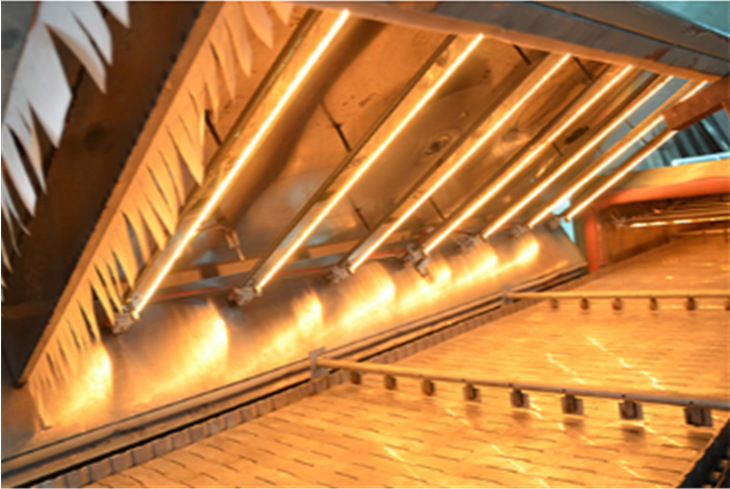
Here’s the thing: infrared lamps don’t bother heating up the air first. They use electromagnetic radiation to hit the dough directly. Because the lamps are made of light quartz and thin filaments, they don’t have that heavy “thermal baggage.” They hit the target temperature almost instantly. But the real magic happens when you turn them off. The moment your PID controller cuts the power, the heat stops. Just like that. No lingering glow, no residual heat soaking into your bread. It lets you nail your temperature within ±1°C. It’s a completely different feeling when you aren’t fighting your own equipment.
The Catch (Because There’s Always One)
We usually go with high-density wattage so the heat punches through the surface of the dough quickly. You can plug these into your existing setups pretty easily, but you have to be careful. Since the heat is so direct, you can get “hot spots” if your lamps are crooked or if the bread isn’t moving. You can’t just set it and forget it. You’ll want to double-check your sensor placement to make sure you’re measuring the actual surface of the bread, not just the air floating around it.
Getting the Setup Right
If you want this to actually work, don’t use a mechanical relay. They’re too slow, and they’ll click themselves to death with how fast these lamps switch on and off. Grab a fast-acting SSR (Solid State Relay) instead. And a quick tip: if you’re ripping out old coils to put these in, check your wiring gauge. You’re pushing a lot of power through a much smaller space, so make sure your wires can handle the load.