
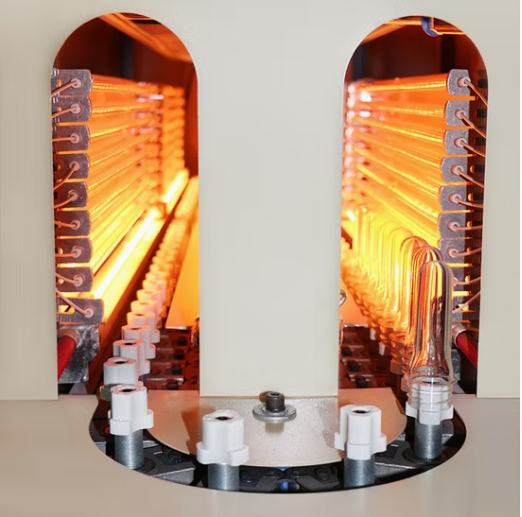
Getting Your Sidel Matrix Temps Right
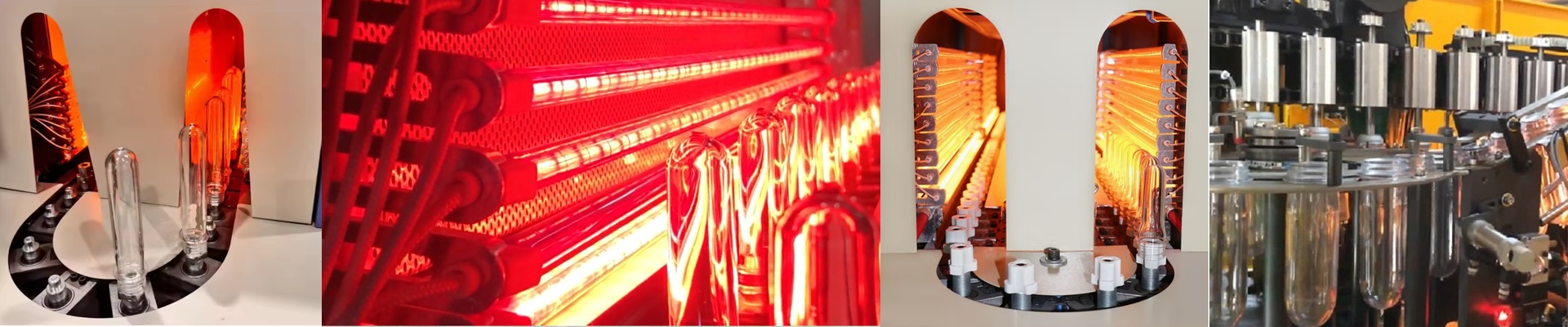
Here is the truth about swapping out your OEM lamps for third-party infrared tubes: the biggest headache is usually the temperature curve. If the wattage or spectral output is even a tiny bit off, your PET preforms won’t hit that sweet spot. That’s how you end up with pearlescence or walls that are way too thin in some spots and thick in others. It’s a mess. We avoid all that by building our lamps to match the original specs exactly. 1:1.
Why the “Math” Actually Matters
We do more than just make sure the lamp fits the slot. We align the voltage, wattage, and filament density so the heat flux feels exactly like the original Sidel parts. Think of it as a drop-in replacement. If the resistance is off, the power draw shifts. And when that happens, it confuses your oven’s PID control loop. By locking in the exact ohmic value, your current machine settings just… work. You don’t have to spend your whole afternoon doing a full thermal recalibration.
The Glass and the Coating
We use high-purity quartz because these things take a beating with rapid heating and cooling. Depending on which Matrix setup you’re running, we apply specific coatings to tweak the emission spectrum. This is just a fancy way of saying we make sure the infrared energy actually gets deep into the PET material instead of just bouncing off the surface. Plus, we use standard industrial connectors, so you can wire them up without having to hack away at your lamp holders.
A Few Real-World Tips
Now, high-density shortwave lamps put out a ton of heat, but that puts a lot of stress on the quartz. If you want them to last, keep your oven airflow clean. Dust is the enemy here. When dust builds up on the tube, it creates hot spots. Those hot spots will crack the quartz, no matter how well the lamp was made. Keep your reflectors polished. Keep the air moving. Do that, and your production line stays steady.