
Keeping Your Bakery Oven from Acting Up
If you’ve spent any time on a bakery floor, you know the struggle. You’ve got your settings dialed in, but then a loading door swings open or a massive tray of cold dough hits the chamber, and suddenly your temperature tanks. It’s a constant fight. When those dips happen, your product consistency goes right out the window. That’s why we lean on infrared (IR) emitters and closed-loop controls. It’s basically a way to stop the “temperature rollercoaster” before it starts.
Why standard heat isn’t enough
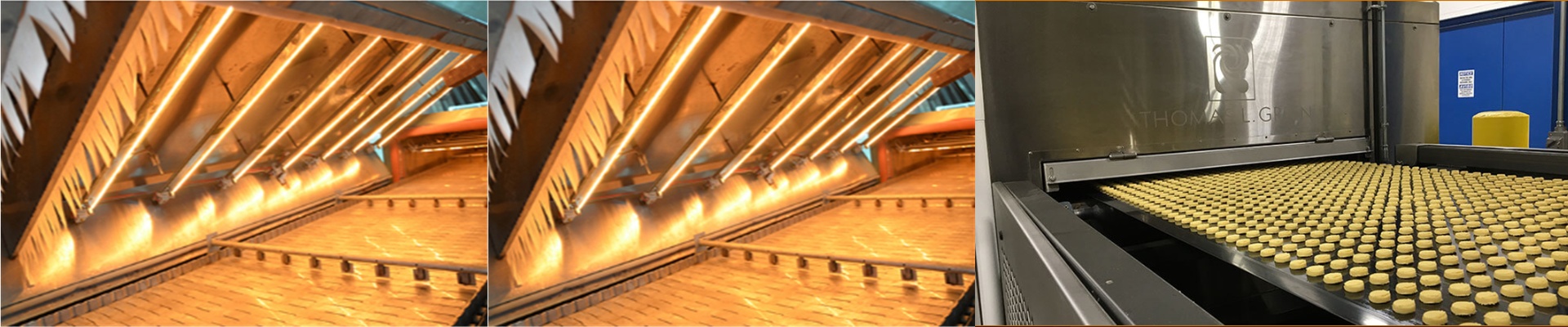
Here’s the thing: convection heating is just too slow. It spends all its time trying to warm up the air, and by the time that air actually reaches your product, the damage is already done. IR is different. It doesn’t mess around with the air; it beams energy straight into the surface of the dough. We pair these emitters with high-speed PID controllers and sensors that act like a hawk. The second the sensor feels a drop, the IR lamps kick in. It happens almost instantly. This fills that thermal gap immediately, often before the oven’s main thermometer even realizes something happened.
Picking the right gear (and the traps to avoid)
You’ll want emitters with high wattage density. We usually go with short-wave IR because it sinks into the dough faster. Just make sure you’re using lamps built for rapid cycling, or they’ll burn out way too quickly. But be careful. You can’t just crank the power to the max and call it a day. If you throw too much heat at a draft, you’ll end up with scorched tops or nasty hot spots. It’s all about the balance between your power output and how fast your conveyor belt is moving. If the belt crawls, that burst of compensation heat will turn your crust into charcoal.
Making it work on the floor
When it comes to the actual wiring, don’t cut corners on the power supply. Those rapid power jumps can fry cheap lamps in no time. I always suggest using solid-state relays (SSRs) instead of those old-school mechanical contactors. SSRs can handle the constant, high-frequency switching without wearing out or clicking like a typewriter. It’s a simple switch that keeps your temperature line flat, no matter how many times the doors open.