
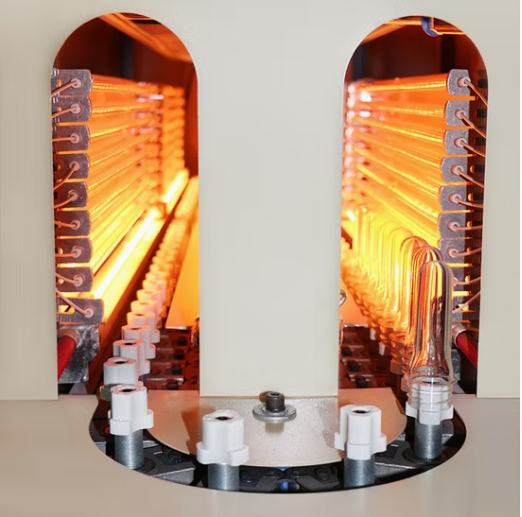
Fixing Those Annoying Heat Spots in KHS Blow Molding
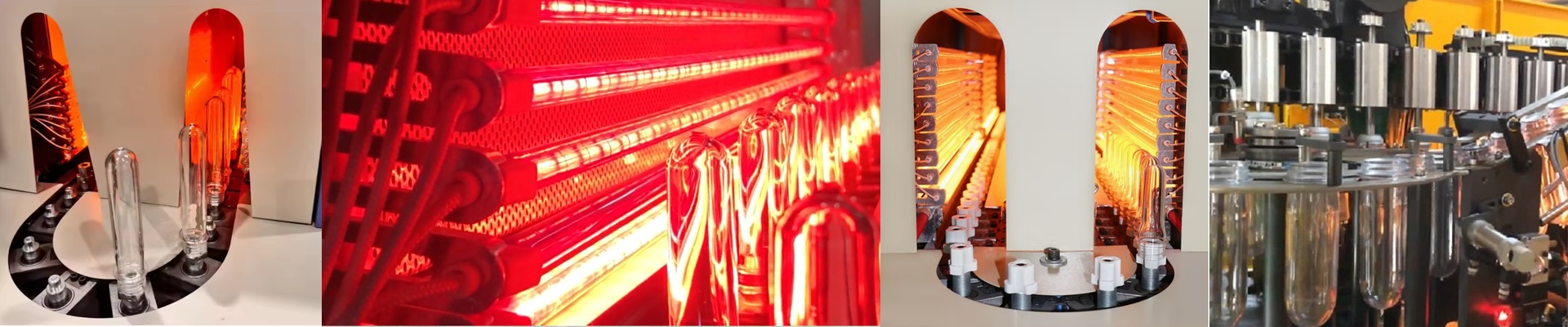
If you’ve spent any time around KHS blow molding machines, you know the headache of uneven heat. One minute everything is fine, and the next, you’re staring at pearlescence or thin walls in your PET preforms. It usually comes down to cold spots—those stubborn areas that just won’t stretch. We got tired of seeing that happen, so we built our own high-end infrared lamps. They’re designed to slide right into Sidel and KHS systems, specifically to kill those inconsistency gaps.
Let’s talk about the heat
The secret is in the wattage-per-centimeter. We spent a lot of time tightening the tolerance on the tungsten filament winding. Why? Because low-grade tubes tend to create “hot spots.” We wanted a flat thermal profile across the whole tube, whether you’re running 230V or 400V. Now, high wattage density is great because it speeds up your cycle times. But there’s a catch. If you crank these lamps to the max, your oven’s ventilation has to work harder. Just double-check that your cooling blowers can handle the extra heat flux, or you might end up overheating the machine frame.
The build quality
We use heavy-wall quartz glass. This keeps the lamps from bowing when things get really hot. As for the setup, we used standard R7s or SK15 connectors. They wire up exactly like the OEM parts, so you aren’t messing around with custom adapters. Plus, we offer specific coatings that shift the infrared spectrum. It basically tunes the lamp to the PET resin’s absorption peak. More heat goes into the plastic, and less is wasted heating up your oven walls.
Real-world use
These tubes are built for the grind. Most of our customers run 24/7, and that’s a brutal environment. By stabilizing the halogen cycle, we’ve managed to make the filaments last longer. The best part? The heat field stays steady as the lamp ages. You won’t find yourself constantly tweaking the PID tuning on your controllers just to keep the quality consistent.