
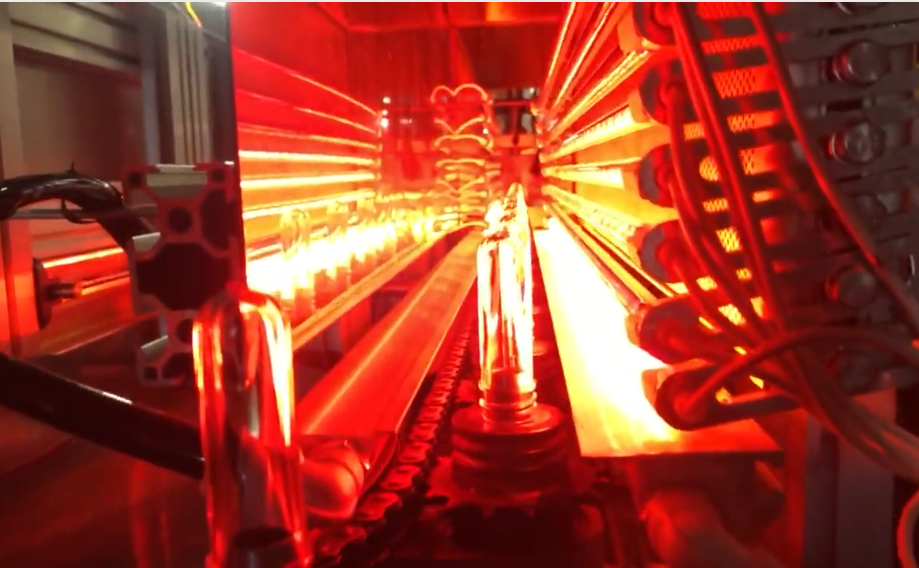
Getting Your Heat Right in Husky HyPET Systems
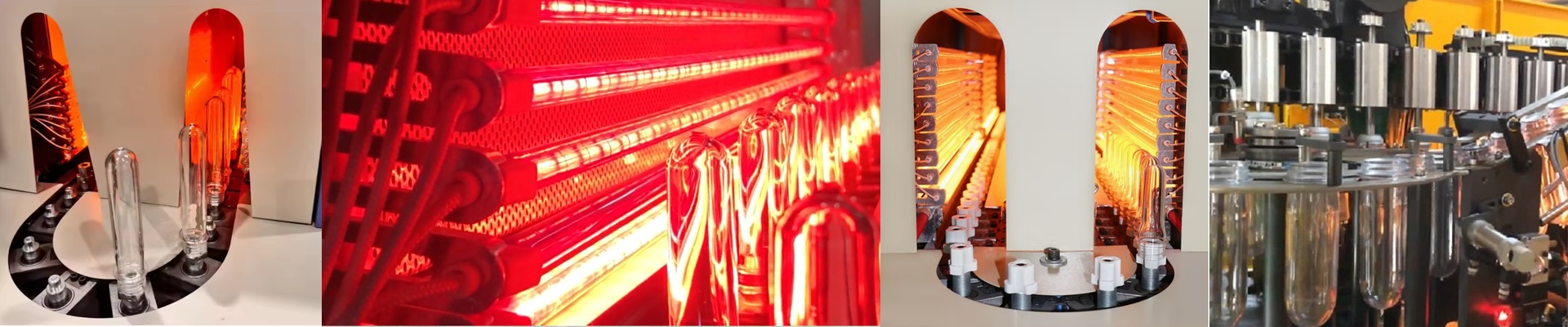
If you’re running Husky HyPET systems, you already know the struggle. You need your PET preforms to hit that exact glass transition temperature before they blow, or everything goes sideways. We’ve spent a lot of time building replacement heater lamps that actually fit the way Sidel and Krones ovens are laid out. But we didn’t just want them to fit—we wanted them to actually get the heat where it belongs.
The “Cold Core” Problem
Here is the thing about standard IR lamps: they’re great at heating the surface, but they often leave the center of the preform freezing. When that happens, you end up with weird wall thickness or that annoying pearlescence in the final bottle. Not a great look. To fix this, we tweaked the quartz composition and the tungsten filament density. This shifts the light toward short-wave infrared. Why does that matter? Because short-wave radiation actually digs deeper into the PET. You get a steady, uniform heat soak all the way through the plastic, not just on the skin.
The Nitty-Gritty Hardware
These are drop-in replacements. No hacking, no fuss. We use heavy-duty R7s or Sk15 connectors because loose contacts are a nightmare. They cause arcing, and before you know it, your terminals are burnt out. Depending on your power rail, we spec these for 230V or 400V environments. We also use high-purity quartz. High-speed lines are brutal on glass because of the constant heating and cooling. Our glass is designed to stay strong and resist crystallization, so you don’t have to worry about a tube becoming brittle and snapping while you’re installing it.
A Few Things to Watch Out For
More wattage means you can run faster cycles. That sounds great, but there’s a catch. Pushing more kilowatts puts a lot more stress on your cooling blowers. If your vents are clogged or your cooling system is struggling, you might overheat the oven frame. That’s a fast track to killing your lamps. And please,keep your reflectors clean. A dirty reflector is like a wall—it kills the heat penetration. When that happens, you’ll be tempted to just crank the lamps higher to compensate. Don’t do that. You’ll just burn them out way faster than you should.