
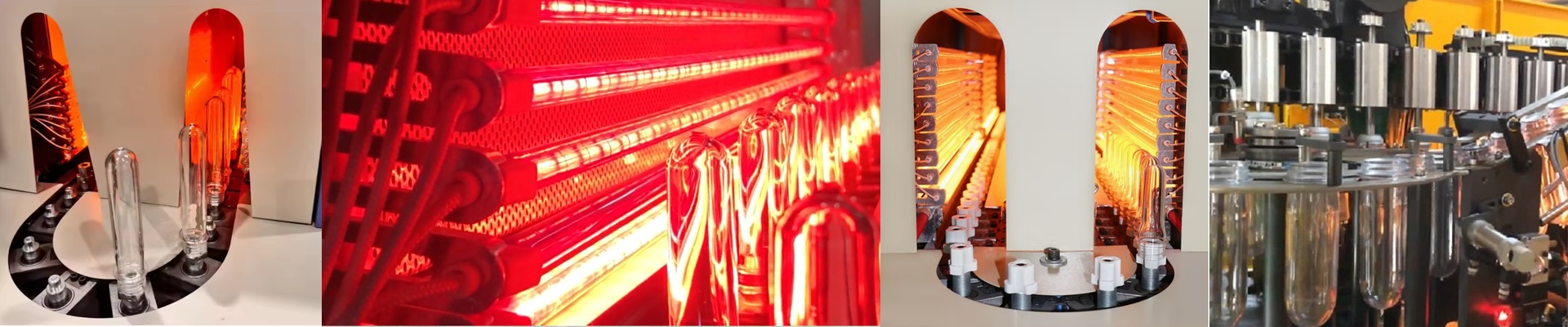

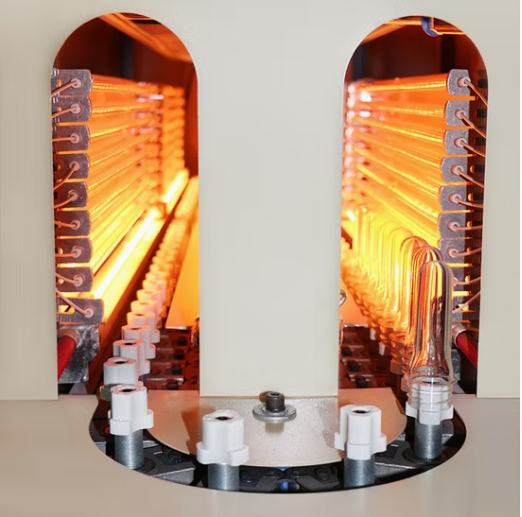
On the blow molding line, the heating section is where your whole shift gets decided. When the heating tunnel starts drifting, you know it immediately—preforms that don’t soften right, blown bottles with stress marks, and a machine that never stops hunting for a stable setpoint. We designed the 2500W preform heater element to cut out that variability and keep the heating profile repeatable, shift after shift. What actually matters under the hood This 2500W infrared emitter is built around one goal: consistent preform heating. The power rating hits the typical demand of a blow molder’s heating tunnel—fast response without overshoot. In practice, that gives you a controlled temperature rise, a clean warm-up curve, and stable surface temperature on the preform, with predictable crystallinity. The geometry and reflector layout shape a uniform thermal field, so heat lands evenly across the neck and the body. When you’re in stretch blow molding, that evenness is exactly what separates good bottles from scrap. Why it fits the machines you run You’re running high-output lines—Sidel, Krones, SIPA, Husky, SACMI, or Nissei ASB—where cycle speed is the baseline, not a wish. With this 2500W element, recovery after door openings is quicker, and the temperature settles faster after a format change. That means less time chasing setpoints and more time making sellable bottles. You see fewer rejects from uneven heating, scrap drops, and line OEE stays steadier. Energy use stays tight too, because the power is matched to the heating task instead of being oversized and wasted. The install details that bite you if you ignore them Installation is straightforward, but the small stuff matters. Match the lamp type to the infrared band your machine specs, and confirm the connector (commonly R7s) and mounting hardware so you don’t end up with misalignment. Double-check voltage, and make sure the reflector is in good shape—worn reflectors change the heat distribution even when the element is brand new. Expect peak surface temperatures, so use proper shielding and follow handling procedures. Keep spares on a preventive replacement schedule; swapping elements before they drift protects heating stability far better than waiting for a failure.