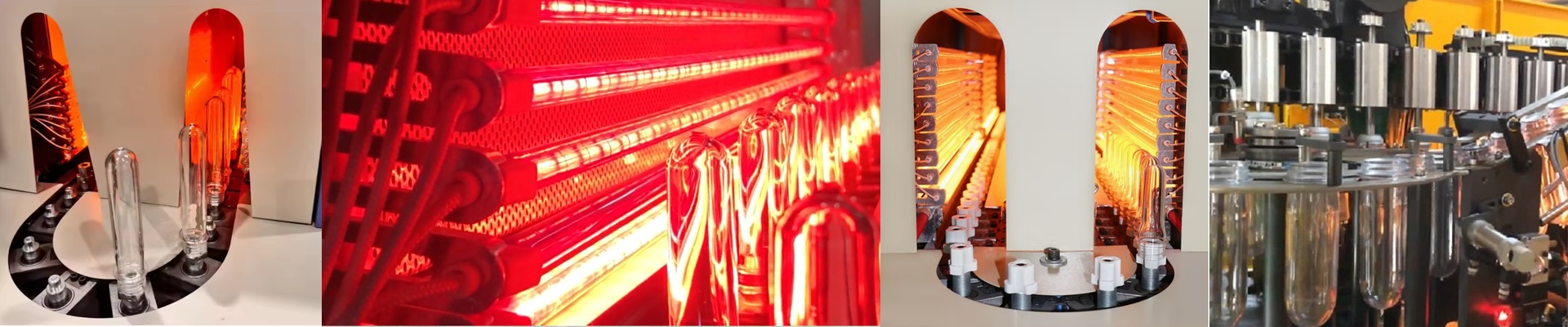

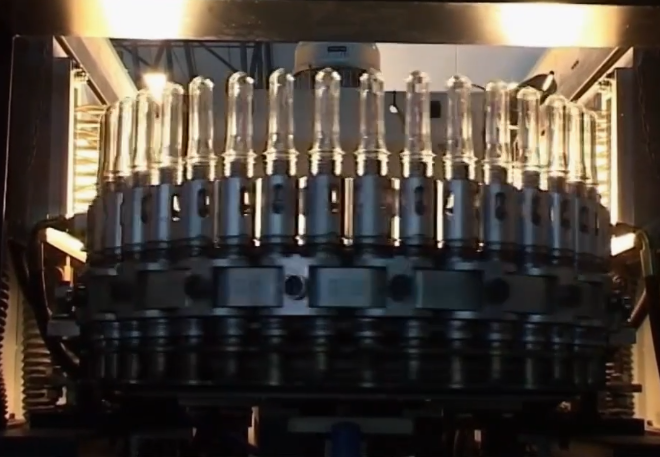
Out on the blow molding floor, the heating tunnel doesn’t negotiate. Preform temperature has to land in a tight window—every cycle—or you’re staring down off-spec bottles, wasted material, and an operator chasing alarms instead of running the line. When an IR emitter starts to drift, you know it immediately: longer heat times, inconsistent stretch, and a rising count of pinholes and dimensional drift on PET containers. That’s why the Krones Contiform 3 Pro IR radiator bulb isn’t just another lamp. It’s a direct-fit heating component, engineered for Krones stretch blow molders, with output and geometry matched to the machine’s heating profile. If you’re running a Contiform 3 Pro, you need a bulb that behaves like the original—same response, same stability, same repeatability.
What matters, technically
The Contiform 3 Pro IR radiator bulb is a short-wave infrared emitter built around a quartz envelope and a high-purity filament, optimized to dump heat quickly and controllably into PET preforms. Short-wave IR hits hard, with fast rise and fall times, so the heating tunnel can nail setpoints and repeat them shot after shot. We spec the bulb to meet OEM expectations: the right wattage density, the correct spectral output profile, and the physical envelope that sits properly in the reflector and mounting hardware. The termination and connector interface line up with the Contiform 3 Pro IR system, so it seats and locks as intended—stable electrical contact, repeatable alignment. In practice, that keeps the heating curve predictable. You get tighter control over preform temperature distribution, and the machine doesn’t have to compensate with extra dwell time or higher power because the emitters are weak or aging.
Why it works on these machines
This bulb is built around Krones blow molding platforms, not a one-size-fits-all approach. It’s engineered to drop straight into the heating sections of the Contiform series, and it’s compatible across other Krones lines that share the same IR module architecture—Matrix and HyPET included. If your plant runs mixed equipment, that matters. You can standardize the replacement bulb spec across multiple Krones machine families, which simplifies spares and cuts down on training time for maintenance. No guessing on connectors, no field mods, and no mismatched output that forces you to retune. That consistency pays off in uptime and quality. When the bulb matches the original thermal behavior, the heating tunnel runs closer to the designed profile, which supports consistent biaxial stretching and stable bottle geometry. You also cut down on heating-related changeover tweaks, which shortens setup and reduces scrap during product change. Energy use is another real-world gain. Short-wave IR is inherently efficient at putting heat directly on the preform surface, and a spec-matched emitter keeps the control loop from fighting underperforming lamps. The payoff isn’t theoretical—less wasted heat, fewer reheat cycles, and a heating section that settles faster after startup.
The details that make the difference
Installation is straightforward on the machines it’s spec’d for, but the details still matter. Alignment and seating have to be right: keep reflectors clean, make sure the bulb seats fully in the holder, and ensure electrical contacts are tight. A loose connection will show up as uneven heating, intermittent faults, and shortened bulb life. Don’t overlook the optics in the heating tunnel. IR performance depends on reflector condition—coatings degrade, residue builds up. Swap in a new bulb and skip the reflector cleanup, and you can still get temperature drift and inconsistent bottles. And plan for wear. IR emitters are consumables, and output declines with time. Base replacement on running hours and what you’re seeing in the process, not whether the lamp still lights. Stretching a bulb past its useful output life forces the control system to compensate, and that compensation shows up as longer cycles, wider variation, and more off-spec product. If you run a Contiform 3 Pro—or a Matrix or HyPET line—treat the radiator bulb as a matched component, not a guess. Use a replacement engineered for the machine’s IR system, and the heating section will do its job quietly: repeat the profile, hold the tolerances, and keep the line moving.